Garage Door Accessories Parker That Blend Technology and Design
A garage door has a bigger visual footprint than almost any other moving part on a home. In many Parker neighborhoods, especially where front-facing garages dominate the elevation, it can shape the entire first impression of the property. Yet homeowners often treat accessories as an afterthought, something practical to tack on after the main door is installed. That approach usually leaves value on the table.
The right accessories do more than make a garage door easier to operate. They sharpen curb appeal, improve daily convenience, and solve the small frustrations that show up over years of use. They can also bridge a gap that many homeowners feel but do not always name clearly: the desire for a garage door system that works with modern life without looking cold, fussy, or overly technical.
That balance matters in Parker. Homes range from newer builds with clean lines and smart home wiring to established properties where owners want upgrades that look intentional rather than futuristic. Good Garage Door Accessories Parker homeowners choose tend to share one trait. They disappear into the design when they should, and stand out only when they are meant to.
Where technology actually earns its place
Not every accessory marketed as "smart" improves the ownership experience. I have seen garages loaded with gadgets that add notifications, blinking lights, and another app on the phone, but do very little to make the system safer or more pleasant to use. The best technology feels almost quiet. It removes friction.
A strong example is the modern wall control panel. Older controls were often just a basic button mounted at shoulder height near the interior door. Functional, yes, but visually clumsy and limited. Newer wall stations can provide lockout controls, vacation mode, integrated lighting control, motion-activated illumination, and clearer status indicators. When chosen well, they also look cleaner. Low-profile faceplates, matte finishes, and backlit controls fit much better in a finished garage or mudroom transition.
The same principle applies to wireless keypads. A keypad used to be a gray plastic rectangle that screamed utility. Today, better models offer slimmer housings, cleaner button layouts, and finishes that coordinate with trim, light fixtures, and exterior hardware. On a dark-stained carriage-style door or a contemporary flush-panel door, that difference is surprisingly noticeable. A keypad sits at eye level near the entry. If it looks cheap, the whole installation feels cheaper.
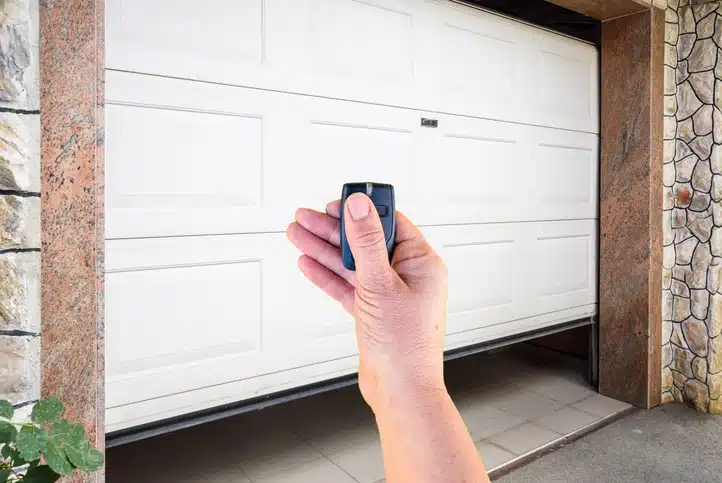
Smartphone connectivity is another category where the design and technology relationship matters. A connected opener can be excellent for families with changing schedules, deliveries, dog walkers, or teenagers who never seem to remember a remote. But the app is only half the story. The physical parts still need to look right and perform reliably. A sleek app cannot compensate for a bulky ceiling unit that rattles, flickers, and disrupts the room above the garage.
For homes with living space over the garage, quieter drive systems often deliver the most meaningful upgrade. Belt-drive openers paired with vibration isolation and soft-start motors reduce the harsh mechanical character of older chain systems. That is technology doing what it should do, improving experience without asking for attention.
The design side is more than color matching
When people talk about garage door design, they usually mean the door panels, the window layout, and the paint or stain color. Accessories deserve the same level of consideration because they create visual rhythm around the opening. Handles, hinges, lights, keypad housings, motion sensors, and even the finish of exposed interior hardware affect whether the system feels cohesive.
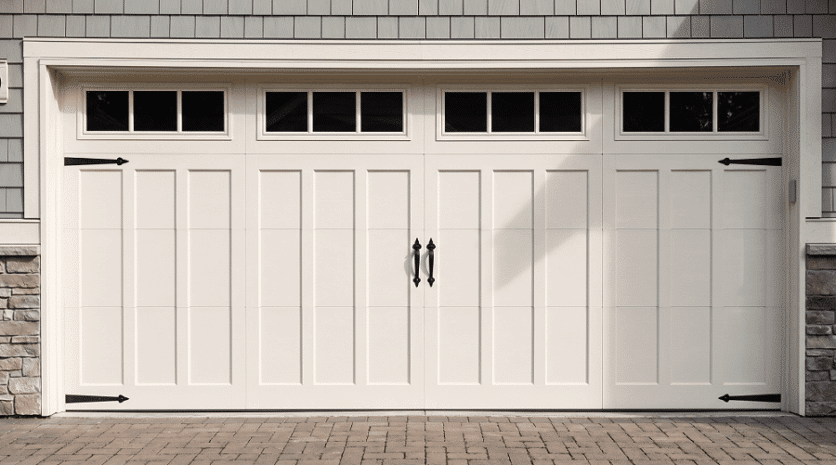
Decorative hardware is one of the clearest examples. On carriage-house-inspired doors, strap hinges and pull handles can add character, but only if proportion and placement are handled correctly. Oversized black hardware on a modest single-car door can look theatrical. Tiny hardware on a broad double door can disappear awkwardly. The best choices echo the scale of the door and tie into other exterior elements such as front entry hardware, lanterns, or window grilles.
Contemporary homes call for a different approach. In those settings, decorative hardware is often unnecessary, and sometimes actively harmful to the look. Instead, the focus shifts to subtle accessories: a flush keypad, minimalist exterior lighting, concealed or color-matched trim interfaces, and an opener with integrated LED lighting that reduces the need for a clutter of ceiling fixtures. Design restraint is still design.
This is where local context matters. Parker homes often need to handle strong sun, temperature swings, dust, and the practical reality that garages serve as workshops, gear rooms, and secondary entries. Accessories cannot just be pretty in a showroom. They need to hold up. Powder-coated metals, UV-resistant plastics, and corrosion-resistant fasteners tend to age better than bargain parts with shiny finishes that fade or pit after a few seasons.
Lighting changes everything
Lighting around a garage door is often treated as a separate conversation from the door itself, but it should not be. Exterior sconces, overhead carriage lights, motion-sensing fixtures, and opener-integrated LED systems all interact with the garage door accessories in view.
On the exterior, good lighting can make decorative hardware feel intentional rather than ornamental. A pair of warm, properly scaled sconces can highlight the texture of wood-look panels, soften the mass of a large door, and improve keypad visibility at night. Poor lighting does the opposite. It can exaggerate cheap finishes, create glare on glossy surfaces, and make entry feel less secure.
Inside the garage, opener lighting has improved significantly in recent years. Older units often relied on standard bulbs with uneven throw and short life under vibration. Newer integrated LED systems cast a wider, cleaner field of light. That matters if the garage doubles as a work zone, bike storage area, or landing space when coming home after dark. It also matters aesthetically. A finished garage with thoughtful lighting feels like part of the house, not a dim utility box attached to it.
I have seen homeowners spend thousands on custom doors and insulated panels, then keep a harsh, buzzing fixture in the center of the ceiling and wonder why the space still feels unfinished. Accessories create atmosphere more than people expect.
Security that does not look industrial
Security features are easiest to appreciate after something goes wrong, but the best ones prevent problems quietly. Reinforced bottom brackets, rolling-code remotes, tamper-resistant keypads, camera-enabled openers, and automatic locks can all serve a purpose. The trick is choosing the right level of complexity.
For many households, rolling-code remotes and a secure smart opener are enough. They reduce the chance of code capture and provide visibility into whether the door was left open. Families who travel frequently may want vacation lock features or app-based user permissions. Homeowners storing expensive bikes, tools, or recreational equipment might benefit from integrated camera systems, especially if package deliveries are placed in the garage.
The aesthetic concern is legitimate. Security accessories can easily make a residential garage look commercial if they are oversized or visibly retrofitted. Cleaner installations place emphasis on integration. Wiring is concealed where possible. Cameras are compact and positioned thoughtfully. Keypads align with trim lines instead of being dropped wherever a screw gun happened to land.
Good security design also respects how people actually move through the space. A keypad should be reachable without standing awkwardly in the weather. An interior control should sit where you naturally reach for it when entering from the house. A camera should capture useful angles, not just the top of a hood or a bright wash of headlights at night.
The accessories worth thinking about first
When homeowners ask where to begin, I usually steer the conversation toward the items that affect daily use the most. Not every garage needs every upgrade, but a handful of accessories consistently earn their keep.
- A quiet belt-drive opener with battery backup
- A well-designed wireless keypad for exterior entry
- An upgraded wall control with lighting and lock features
- Integrated or coordinated lighting inside and outside the garage
- Decorative hardware only if it truly suits the door style
That order is not arbitrary. The opener shapes the feel of every cycle. The keypad solves access issues immediately. The wall control improves day-to-day use in ways families notice within a week. Lighting changes both comfort and appearance. Decorative hardware matters, but it should come after function and scale are sorted out.
Matching accessories to the architecture of the home
A mistake I see often is buying accessories in isolation. Someone likes matte black handles on a sample board, or a brushed-metal keypad in an online photo, then installs them on a house whose exterior language says something completely different. The result is not disastrous, but it rarely feels resolved.
A traditional home with stone, warm siding, and divided-light windows usually responds well to accessories with a bit of depth and visual weight. Textured black hardware, warmer lighting temperatures, and visible but restrained exterior fixtures tend to fit naturally. By contrast, a modern farmhouse might support black accessories too, but with crisper lines and less ornament. A contemporary home often wants the opposite of decorative excess. It benefits from accessories that recede, using clean geometry and minimal visual interruption.
Window inserts are sometimes overlooked in this conversation. While technically part of the door more than an accessory, their relationship to exterior lighting and hardware is strong. A top-row window pattern paired with the right sconces can make the entire facade feel more balanced. Pair the same windows with busy hardware and overly bright fixtures, and the composition gets crowded fast.
Parker homeowners also need to consider sun exposure. Dark finishes can look fantastic, but they show dust and surface wear more readily. South- and west-facing exposures can be unforgiving. In those cases, slightly softer sheens and textured finishes often age better than glossy or ultra-flat surfaces.
Smart features that help, and smart features that annoy
A practical garage should not ask too much of its owner. This sounds obvious, yet many connected accessories introduce unnecessary friction. Multiple apps, finicky pairing, delayed notifications, and over-sensitive alerts can turn a simple convenience into background irritation.
The best smart features tend to have a few qualities in common. They are reliable, easy to override manually, and useful even when you stop noticing them. An app that confirms the door closed after you drove away is helpful. A geofencing routine that opens the garage every time you walk the dog past the side driveway is not.
There is also Garage Door Accessories Parker a generational aspect to consider. In some households, everyone is comfortable managing access through a phone. In others, grandparents, house sitters, or service providers still need intuitive physical controls. That does not make the setup less modern. It makes it better designed. A garage system should accommodate the real users of the home, not an idealized tech profile.
For detached garages or workshops, signal range and wireless stability matter more than the product box may suggest. A smart opener that performs perfectly in a showroom can become inconsistent once installed behind insulated walls or farther from the home's router. In those cases, simpler accessories sometimes outperform more elaborate ones.
Finishes, materials, and what ages gracefully
There is a big difference between accessories that look good on installation day and accessories that still look good five or seven years later. Garage environments are tough. Heat, cold, vibration, vehicle exhaust, airborne dust, and occasional moisture all take a toll.
Powder-coated steel hardware generally wears better than thin painted metal. UV-stable polymers tend to hold color more consistently than low-cost plastic. Keypads with tactile, sealed buttons age better than flimsy membrane styles in exposed conditions. Interior wall controls should feel solid under the finger. That sounds minor, but it tells you a lot about the quality of the device.
Battery backup units deserve a brief mention here as well. In areas where outages happen during storms or grid events, this is more than a convenience feature. It can be the difference between getting a car out when you need it and wrestling with manual release under less-than-ideal conditions. A battery enclosure is not glamorous, but its value becomes obvious very quickly when power is unavailable.
If a homeowner is investing in a finished garage, epoxy floors, cabinetry, or a home gym setup, cheap accessories become even more glaring. The garage starts to function like a true room, and every plastic, rattling, mismatched component stands out.
When accessories solve real household problems
The most satisfying upgrades are often the least flashy. A family with three drivers and one chronically misplaced remote may find that a keypad and smartphone access remove a small daily argument. A homeowner who leaves before sunrise might appreciate motion-triggered interior lights more than any other feature. Someone with a bedroom above the garage can feel the difference between an old chain drive and a well-installed belt drive on night one.
One project that stays with me involved a home where the garage served as the primary entry for five people, two dogs, sports gear, and constant package deliveries. The existing door worked, but everything about the experience was clumsy. The wall button was dim and dated. The opener was loud. Exterior lighting was too weak for the keypad to be comfortable at night. We did not change the door itself right away. Instead, the upgrades focused on accessories: quieter opener, better control station, improved keypad placement, coordinated lighting, and cleaner trim integration. The owner later said the house felt renovated, even though the core structure had barely changed.
That is the hidden power of well-chosen garage door accessories. They affect routines, not just appearances.
A sensible way to choose Garage Door Accessories Parker homeowners will actually appreciate
Local style matters, but daily habits matter more. Before buying anything, it helps to ask a few blunt questions.
- Is the garage mainly for parking, storage, work, or as the primary family entrance?
- Does anyone sleep or work in a room above or beside it?
- Do you want the accessories to stand out as design features or disappear into the architecture?
- Will several users need simple access, including people who may not use smartphone controls?
- Are you solving a real problem, or just reacting to a product trend?
Those answers quickly narrow the field. A garage used as a workshop may justify brighter integrated lighting and upgraded wall controls. A design-forward facade may benefit from carefully scaled decorative hardware and sleeker visible components. A busy family entrance needs access simplicity more than visual drama.
This is also the point where budget choices become clearer. If funds are limited, spend where performance changes the lived experience. A premium opener and thoughtful lighting usually return more value than decorative add-ons alone. If the budget allows, then refine the look with hardware, finish coordination, and cleaner integration details.
Why restraint often looks more expensive
One of the more counterintuitive truths in garage design is that not every available accessory should be installed. Too many visible upgrades can make a system feel busy and less refined. This is especially true when different components come from different product lines with slightly different blacks, bronzes, silvers, or plastics.
Restraint tends to read as confidence. A quiet opener, a refined keypad, lighting that flatters the facade, and hardware that matches the architectural language can feel more upscale than a larger collection of competing features. Good design is often about what you leave out.
This matters if resale is part of the conversation. Buyers may not articulate why one garage setup feels more polished than another, but they notice. A garage that operates smoothly, looks cohesive, and supports modern expectations without broadcasting complexity has broad appeal.
The most successful Garage Door Accessories Parker homes use are not chosen because they are trendy. They are chosen because they resolve a specific need while respecting the character of the house. That could mean sleek controls in a contemporary build, traditional handles and lanterns on a carriage-style door, or a battery-backed opener and minimalist keypad that simply make life easier every day.
When technology and design are in balance, the garage stops feeling like a purely mechanical zone. It becomes what it should have been all along, a functional, welcoming extension of the home.
Select Garage Doors
11479 Pine Dr
Parker, CO 80134, United States
Phone: (303) 228-0018
FAQ About Garage Door Accessories Parker
Where can I find garage door accessories?
Garage door accessories are available from garage door service companies, authorized dealers, home improvement stores, and specialist suppliers. Select Garage Doors supplies and installs accessories for homeowners in Parker, including compatible remotes, wireless keypads, weather seals, and smart controls. Check your opener model and door specifications before choosing a replacement or upgrade.
How to make a garage door more attractive?
Cleaning the door, refreshing a manufacturer-approved finish, and choosing coordinated decorative handles or hinge accents can improve its appearance. Compatible window inserts may also change the look of an existing window section. Match accessories to the door material and style, and make sure added hardware does not interfere with movement, seals, or safety equipment.
Where can I buy garage door inserts?
Decorative window inserts can be sourced through the door manufacturer, an authorized garage door dealer, or a supplier that carries parts for your specific door series. Match the model, window frame dimensions, and attachment system; inserts are not universally interchangeable. Ask a professional to confirm compatibility before ordering, especially if the work involves glass or changes to a door section.